
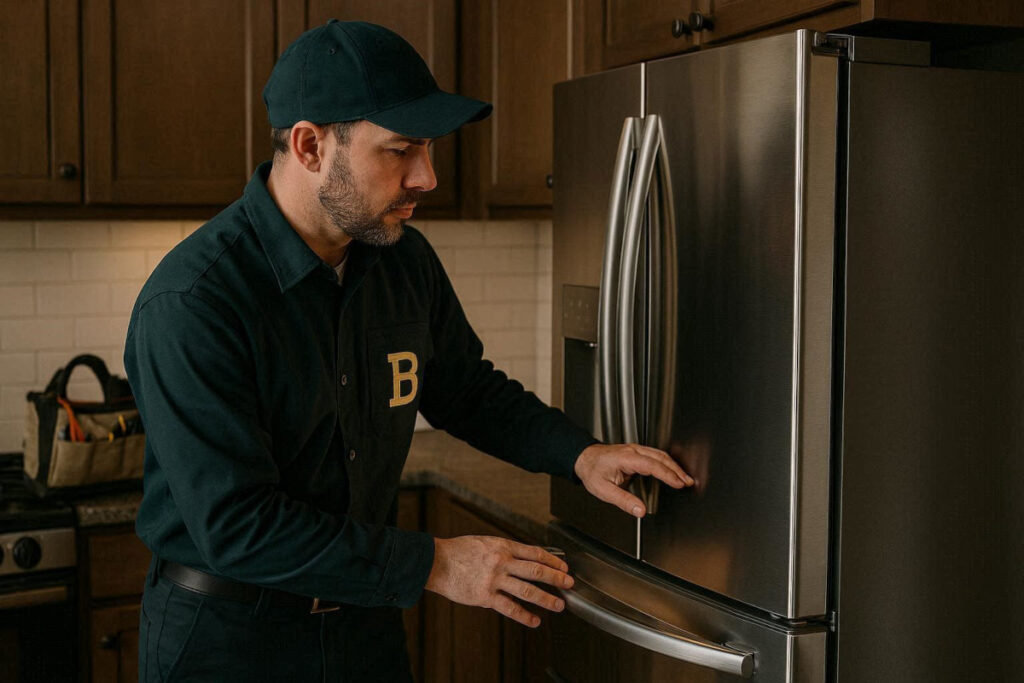
Why Is My Refrigerator Not Cooling?
When your refrigerator stops cooling properly, it’s more than just an inconvenience — it can lead to spoiled food, higher energy bills, and potential damage to the appliance itself. Some cooling problems are minor and easy to fix, while others require professional diagnosis and repair. If your refrigerator is not cooling properly, it can lead to spoiled food and higher energy bills.
Below are the most common reasons a refrigerator may stop cooling and what Brooklyn homeowners should check before calling a technician.
1. Dirty Condenser Coils and Refrigerator Not Cooling Issues
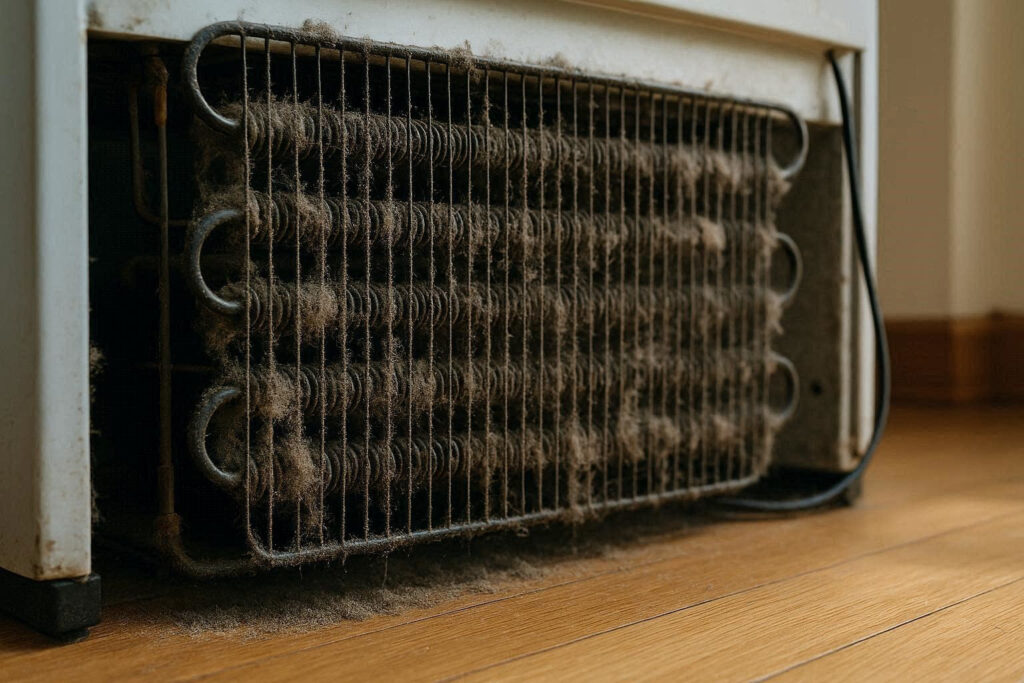
Condenser coils release heat from the refrigerator. When they’re covered with dust, pet hair, or debris, the system cannot dissipate heat efficiently.
Symptoms:
- The refrigerator feels warm on the sides
- Motor runs constantly
- Poor cooling performance
What you can do:
- Unplug the refrigerator.
- Locate the coils (usually behind or underneath the unit).
- Gently clean them using a coil brush or vacuum.
If cleaning the coils does not improve cooling within 24 hours, the issue may involve internal components
2. Evaporator Fan Motor Failure
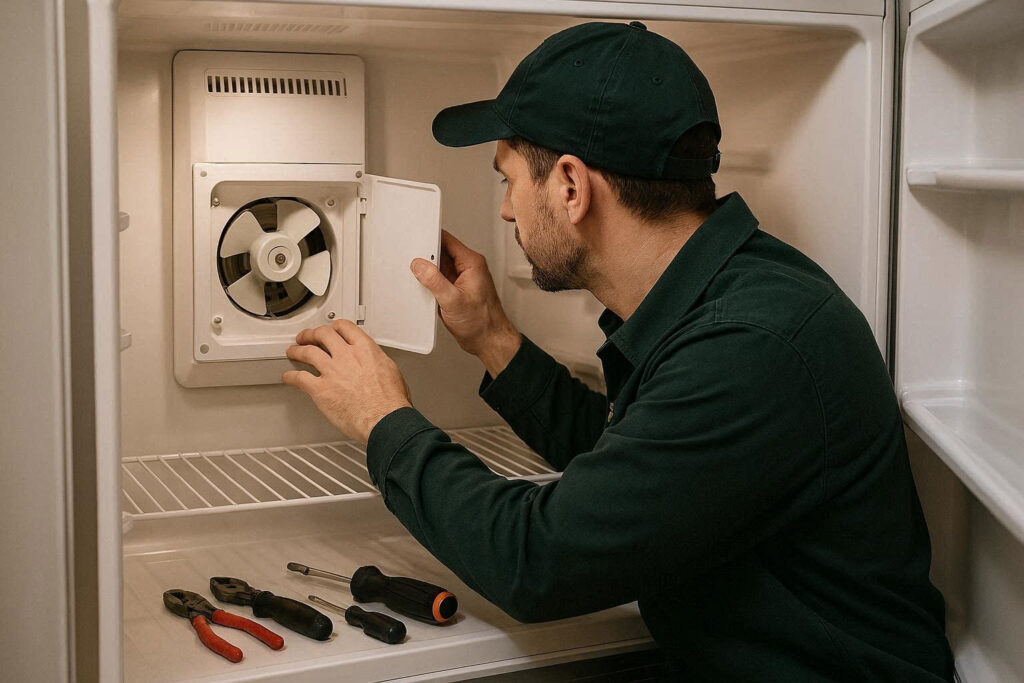
The evaporator fan circulates cold air from the freezer to the refrigerator compartment. If it fails, the freezer may remain cold while the fridge becomes warm.
Common signs:
- The freezer is cold, fridge section is not
- Unusual buzzing or grinding noises
- Weak airflow from vents
A faulty evaporator fan usually requires part replacement. This is not typically a DIY repair unless you have technical experience.
3. Thermostat or Temperature Control Problems
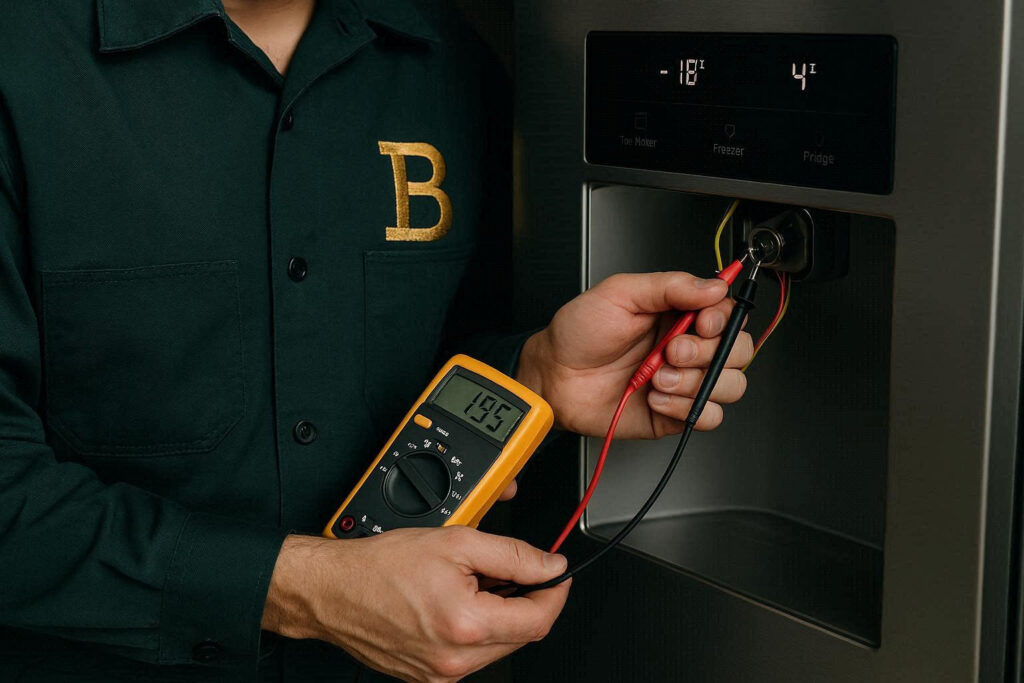
If the thermostat is malfunctioning, it may not signal the compressor to start.
Check for:
- Incorrect temperature settings
- Display panel errors
- Refrigerator not cycling on and off properly
Modern refrigerators often use electronic control boards instead of traditional thermostats. When control boards fail, professional diagnostics are recommended.
4. Blocked Air Vents
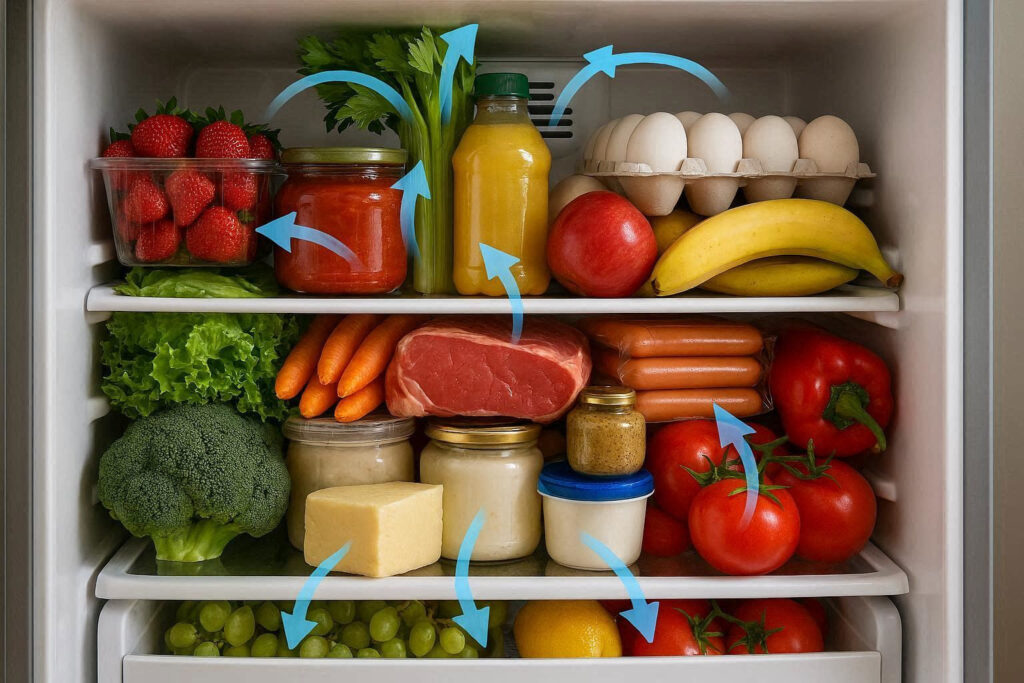
Cold air must circulate freely between compartments.
Airflow may be restricted by:
- Overpacked shelves
- Items blocking internal vents
- Ice buildup
Try rearranging food and ensuring vents are unobstructed. If airflow remains weak, there may be a deeper issue, such as a defrost system malfunction.
5. Defrost System Malfunction
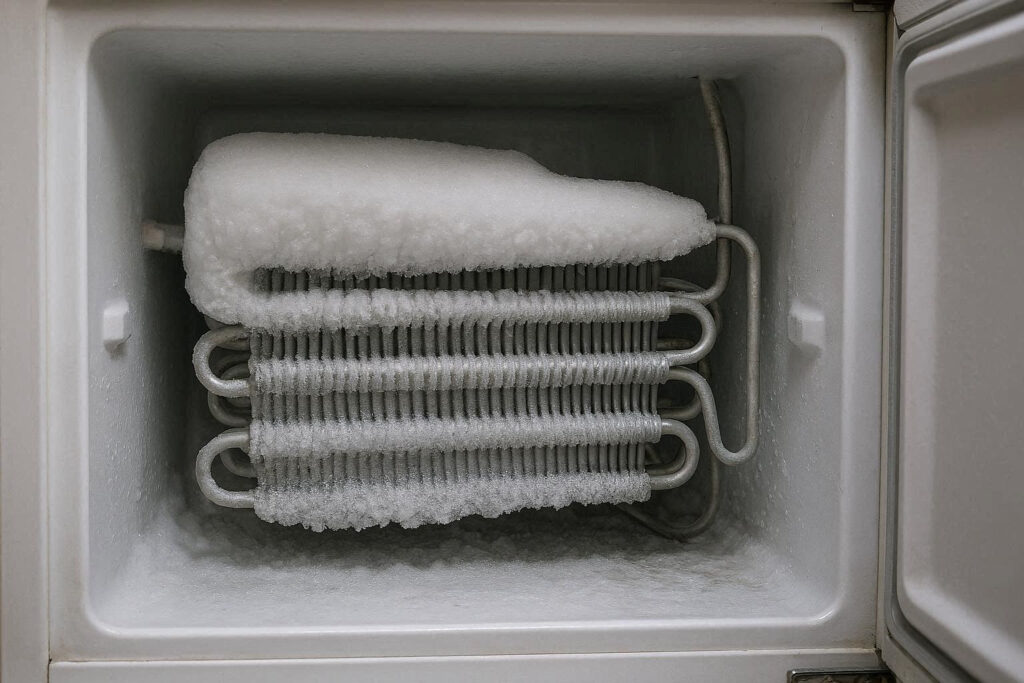
If the defrost system fails, frost builds up around the evaporator coils, preventing proper cooling.
Signs include:
- Ice accumulation in the freezer
- Refrigerator warming gradually
- Clicking sounds during cycles
Defrost heaters, thermostats, or timers may need replacement.
6. Door Gasket (Seal) Damage
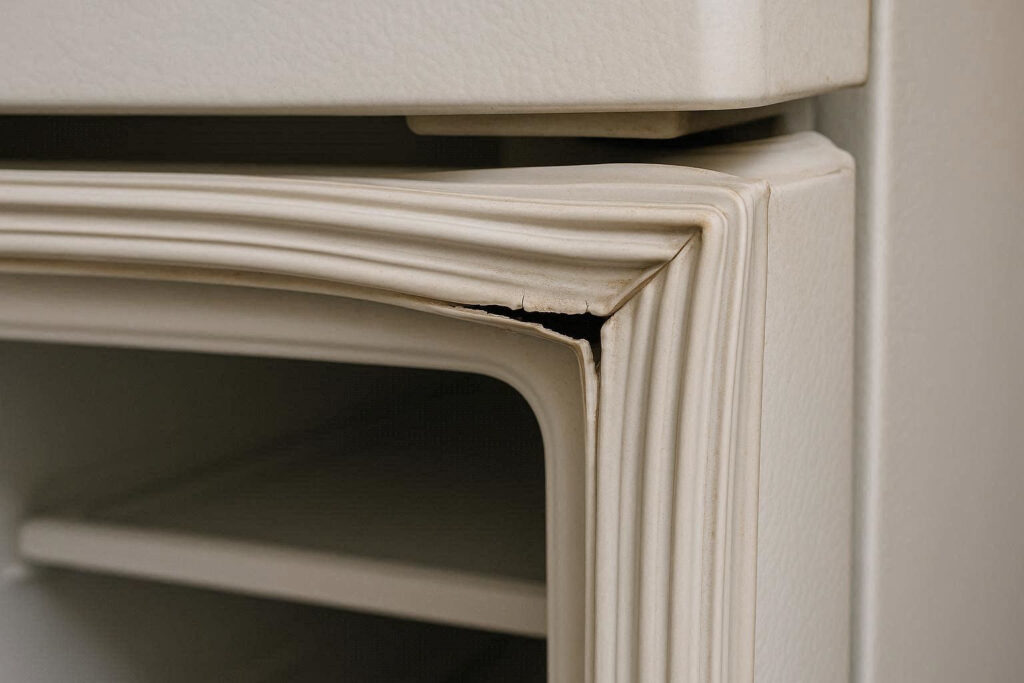
A damaged gasket allows cold air to escape and warm air to enter.
Inspect for:
- Cracks
- Gaps
- Loose or warped rubber seals
If the seal is compromised, the compressor works harder, increasing energy consumption and reducing cooling efficiency.
7. Compressor or Sealed System Issues
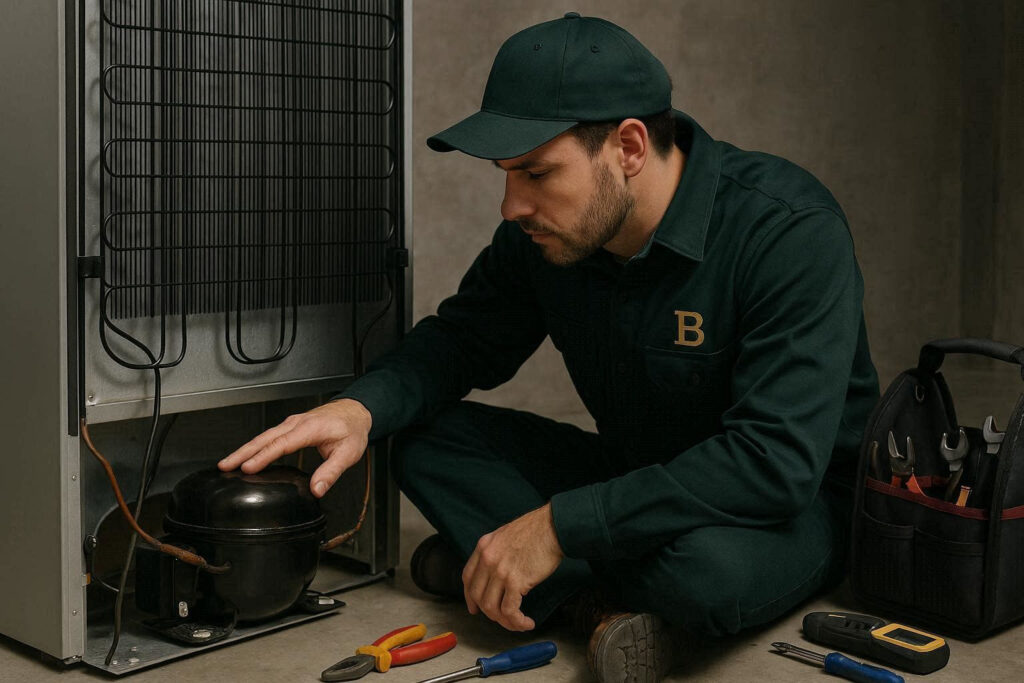
This is one of the most serious causes of cooling failure.
Potential problems:
- Refrigerant leaks
- Compressor failure
- Internal pressure imbalance
These repairs involve sealed system components and require specialized tools and certification.
If your refrigerator continues to warm despite basic troubleshooting, professional diagnosis is essential. Our team provides Licensed Appliance Repair in Brooklyn, NY, including specialized Refrigeration Service & Repair in Brooklyn, New York, with same-day service available.
Step-by-Step Troubleshooting Checklist
Before calling a technician, try this quick checklist:
- Confirm power supply and circuit breaker.
- Check temperature settings.
- Clean condenser coils.
- Ensure doors close tightly.
- Listen for compressor activity.
- Check for unusual noises or error codes.
If the refrigerator remains warm after these checks, internal components may be failing.
If these steps don’t resolve the issue, schedule professional refrigerator repair service in Brooklyn.
How to Prevent Future Refrigerator Cooling Problems
Preventive maintenance helps reduce the risk of refrigerator cooling issues.
Here are practical steps homeowners can take:
- Clean condenser coils every 6–12 months
- Avoid overloading shelves and blocking airflow
- Check door seals regularly
- Keep refrigerator temperature between 37–40°F
- Ensure proper ventilation behind the appliance
Routine maintenance reduces strain on the cooling system and extends appliance lifespan.
When Is Food No Longer Safe?
Food safety is critical.
- Perishable food should not remain above 40°F for more than 2 hours.
- If the refrigerator has been warm overnight, many items may need to be discarded.
- Always use a thermometer to verify internal temperature.
Prompt repair helps prevent food loss and additional expenses.
According to the FDA food safety guidelines, perishable food should not remain above 40°F for more than two hours.
Energy Bill Impact of a Cooling Problem
A struggling refrigerator often runs continuously.
This leads to:
- Higher electricity bills
- Increased wear on the compressor
- Shortened appliance lifespan
Addressing cooling problems early can prevent more expensive repairs later.
When Should You Call a Professional?
Call a licensed technician if:
- The refrigerator is completely warm
- You hear loud clicking or buzzing
- Ice buildup returns quickly
- The compressor is not running
- There are electronic error codes
- DIY cleaning does not help
Delaying repair can turn a minor issue into a costly compressor replacement.
When to Call a Refrigerator Repair Technician in Brooklyn, NY
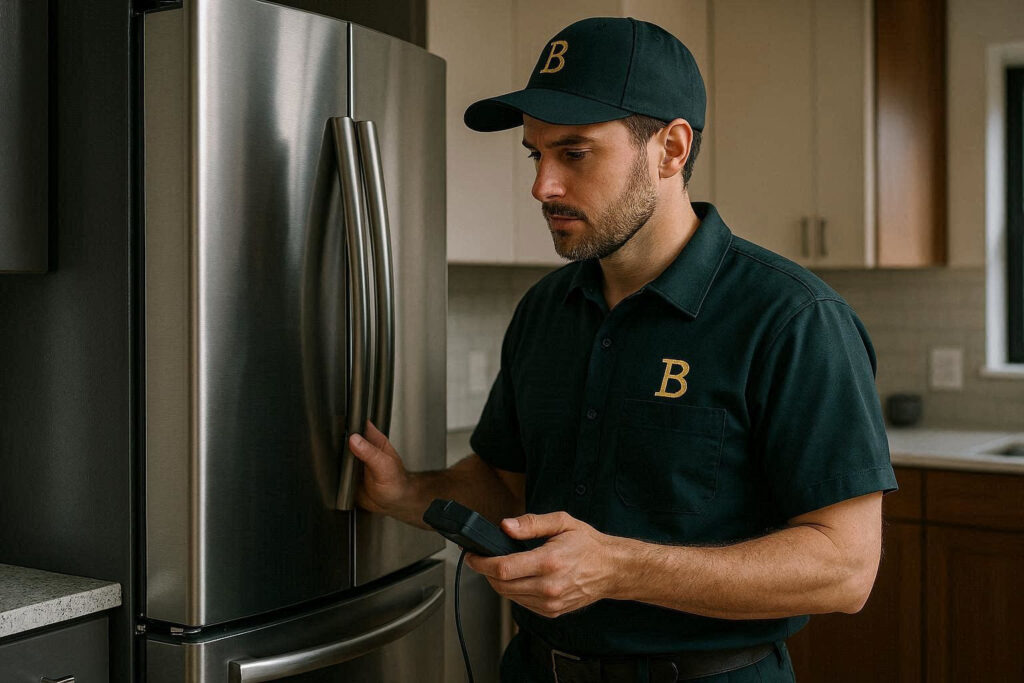
If basic troubleshooting does not resolve the refrigerator not cooling issue, professional service may be necessary. Some problems — such as compressor failure, refrigerant leaks, or electronic control board malfunctions — require specialized tools and technical expertise.
Brooklyn homes often experience heavy refrigerator usage, especially in multi-family buildings where ventilation may be limited. When cooling performance declines despite cleaning coils and adjusting settings, early professional diagnosis can prevent more expensive repairs.
If you notice unusual noises, constant cycling, or warm internal temperatures, scheduling a licensed appliance repair service is the safest next step.
Conclusion
Refrigerator cooling problems range from simple maintenance issues to complex mechanical failures. Early diagnosis can save money, reduce energy waste, and prevent food spoilage.
If your refrigerator is not cooling properly, professional service ensures safe, reliable repair — especially when sealed systems or electrical components are involved.
Need Professional Refrigerator Repair?
If your refrigerator is not cooling and the troubleshooting steps do not solve the issue, timely professional service can prevent food loss and further mechanical damage.
Licensed refrigerator repair ensures safe diagnostics, proper part replacement, and long-term reliability.
Frequently Asked Questions
Why is my refrigerator running but not cooling?
If your refrigerator is running but not cooling, the issue may involve dirty condenser coils, a failing evaporator fan, blocked airflow, or a malfunctioning thermostat. In more serious cases, compressor or sealed system problems may prevent proper cooling even though the motor is operating.
If cleaning coils and checking airflow does not restore cooling, professional diagnosis is recommended.
Can I fix a refrigerator that is not cooling myself?
Some minor issues can be resolved without professional help, such as cleaning condenser coils, adjusting temperature settings, or ensuring door seals are intact.
However, problems involving refrigerant leaks, compressors, electrical control boards, or internal components should only be handled by licensed technicians for safety and reliability.
How much does refrigerator repair cost in Brooklyn, NY?
Refrigerator repair costs vary depending on the issue. Minor repairs such as thermostat replacement or fan motor repair are generally more affordable than sealed system or compressor repairs.
The best way to determine cost is through professional inspection and diagnosis, especially for cooling failures.
Is it worth repairing an old refrigerator?
If the refrigerator is less than 10–12 years old and the repair cost is reasonable compared to replacement, repair is often worthwhile.
However, if the unit requires compressor replacement and is already nearing the end of its lifespan, replacement may be more cost-effective.
A professional technician can help evaluate the condition and recommend the most practical solution.